Godzilla Minus Zero ~ Review
By: [email protected] on
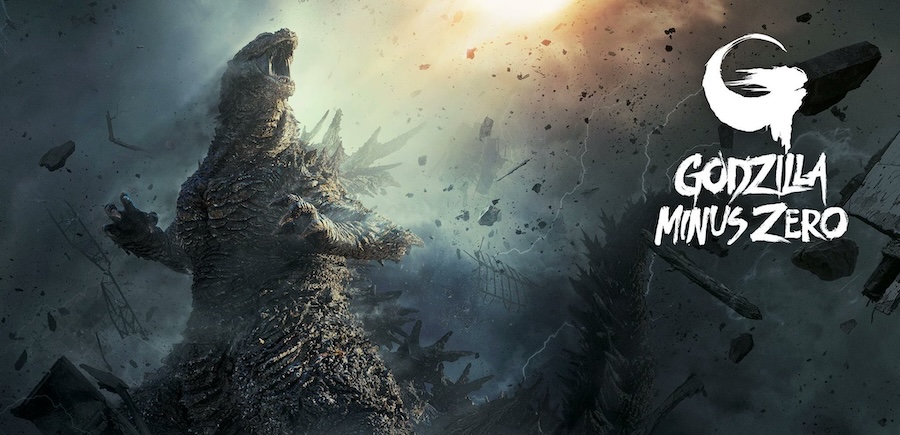
The most enduring aspect of Godzilla as a concept is its mutability. The first film in the long-running series, 1954’s Gojira, saw the radiated monster as a metaphor for the horror of nuclear weapons, where Godzilla’s rampage through post-war Tokyo echoed the bombings of Hiroshima and Nagasaki. However, by the 1960s and 70’s, Godzilla became a hero, fighting all manner of creatures that threatened Earth, even pollution in 1971’s Godzilla vs. Hedorah (called Godzilla vs. The Smog Monster in the United States). In the 80s and 90s, Godzilla became more of an anti-hero. At other times, Godzilla is portrayed as a force of nature, something like a hurricane or earthquake. This has kept the creature alive in the public consciousness for seventy years now.
Recently, in the American version of the Godzilla saga (called the MonsterVerse), Godzilla has been an indifferent protector of Earth and teams up with King Kong to battle villainous monsters. Godzilla Minus One, written and directed by Takashi Yamazaki, was possibly one of the best movies of 2023. The film is set in 1946 amongst the ashes of World War II, and follows Koichi (Ryunosuke Kamiki), a disgraced Kamikaze pilot battling Godzilla. Now Yamazaki is back with something that’s a rarity in the Godzilla series (at least in the Japanese movies): a direct sequel. Like the previous film, the latest entry Godzilla Minus Zero, plays as an earnest drama about post-war Japan, tackling big themes such as revenge, guilt, and trauma with a Spielbergian-esque blockbuster panache.
The following contains minor spoilers for Godzilla Minus Zero. It’s 1949, two years after a scrappy band of survivors (led by Koichi) got together and defeated Godzilla. Now, Koichi, his wife Noriko (Minami Hamabe), and adopted daughter Akiko try to bring normalcy to their life as Japan struggles to rebuild from the ashes of World War II and the Godzilla attack from the previous film. That normalcy is shattered when a flying dragon creature dubbed “King Ghidorah” attacks Matsumoto City. So, Koichi is brought back into the fold as a monster fighter along with several other characters from Minus One.
What I think endeared me most to Godzilla Minus Zero, much like its predecessor, was how emotional it is. Godzilla movies can sometimes go overboard with exposition, camp, and monster action, which makes the human characters feel like an afterthought. The characters in the Minus films, on the other hand, would be just as compelling even without any monster carnage. However, that monster carnage is impeccably staged. Yamazaki continually keeps his camera with characters on the ground as they deal with the immense creatures battling around them, but he will pull out to show the scale of these terrifying monsters. A thrilling dog-fight in the skies turns to horror as a monster raises buildings into the air with its gravity-defying powers. There’s a dream sequence where Godzilla attacks New York, which is haunting, horrifying, and awe-inspiring.
If you’ve been reading my reviews, you know that I love kaiju movies and Godzilla movies especially. So, if a filmmaker makes a compelling emotional story, which also happens to include one of my favorite monsters…well, I’m going to call this one of the best movies of the year.
Three and a half stars out of Four
Note: While many Godzilla movies are, if not specifically for kids, at least child–friendly, Minus Zero is not for children. It is rated R for violence. So, for the Godzilla-obsessed kiddos they’ll have to wait for next year’s Godzilla x Kong: Supernova.
 WhoRepresents.com is safe & secure